- 0
- 1,165 word
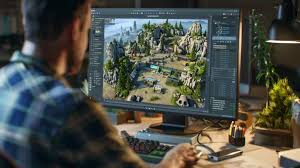
The world of competitive gaming, also known as esports, has experienced explosive growth over the past decade. With millions of players, global tournaments, and billion-dollar revenues, esports is now a mainstream industry. At the heart of this transformation lies Artificial Intelligence (AI)—a powerful technology reshaping how games are played, trained for, analyzed, and experienced. From smarter opponents to advanced player analytics and real-time strategy optimization, AI is revolutionizing competitive gaming in unprecedented ways.
In this in-depth, SEO-friendly article, we’ll explore how AI is transforming competitive gaming, its key applications, benefits, challenges, and what the future holds for esports.
Understanding AI in Competitive Gaming
Artificial Intelligence refers to computer systems capable of performing tasks that typically require human intelligence, such as learning, decision-making, pattern recognition, and problem-solving. In competitive gaming, AI is used to:
- Analyze massive volumes of gameplay data
- Simulate human-like opponents
- Improve player performance
- Detect cheating and fraud
- Enhance viewer engagement
By leveraging machine learning, deep learning, and neural networks, AI systems continuously learn and improve, making them ideal for the fast-paced and complex world of esports.
AI-Powered Game Development and Design
One of the most significant ways AI is revolutionizing competitive gaming is through game development and design.
Smarter Non-Player Characters (NPCs)
Traditional NPCs followed pre-programmed rules, making them predictable. AI-driven NPCs, however, can adapt to player strategies, learn from past encounters, and react in real time. This creates more challenging and realistic gameplay, especially in competitive environments.
Balanced Competitive Gameplay
AI helps developers analyze millions of matches to identify overpowered characters, weapons, or strategies. By using AI-based balancing tools, developers can fine-tune gameplay mechanics, ensuring fairness and maintaining competitive integrity—critical for esports success.
AI in Player Training and Performance Enhancement
Professional esports players now rely heavily on AI to sharpen their skills.
Personalized Training Programs
AI tools analyze individual gameplay data, identifying weaknesses in reaction time, positioning, decision-making, and mechanics. Based on this analysis, AI creates personalized training regimens, helping players improve faster than traditional coaching methods.
AI Coaches and Bots
Advanced AI bots act as sparring partners, mimicking the playstyles of top-tier professionals. These bots allow players to practice against specific strategies, champions, or maps, offering a level of preparation previously impossible.
Real-Time Feedback
Some AI systems provide real-time feedback during practice sessions, highlighting mistakes as they happen. This immediate insight helps players adjust strategies on the fly and develop better in-game awareness.
Game Analytics and Strategy Optimization
AI-driven analytics have become a cornerstone of competitive gaming strategy.
Match Data Analysis
Esports matches generate massive amounts of data—player movements, actions per minute, resource usage, and more. AI processes this data to uncover patterns and trends that human analysts might miss.
Predictive Strategy Modeling
AI can simulate thousands of potential match scenarios to predict outcomes based on different strategies. Teams use these insights to refine drafts, optimize tactics, and counter opponents more effectively.
Opponent Analysis
By studying historical match data, AI can identify an opponent’s preferred strategies, weaknesses, and habits. This gives teams a significant competitive edge during tournaments.
AI and Anti-Cheating Systems in Esports
Cheating poses a serious threat to competitive gaming. AI plays a crucial role in maintaining fair play.
Behavioral Analysis
AI systems monitor player behavior to detect anomalies such as inhuman reaction times, perfect accuracy, or suspicious movement patterns. These systems are far more effective than traditional anti-cheat software.
Real-Time Detection
Modern AI-powered anti-cheat tools can detect and flag cheating in real time, preventing unfair advantages during live competitions and protecting the integrity of esports tournaments.
Enhancing Spectator Experience with AI
AI isn’t just transforming how games are played—it’s also revolutionizing how they are watched.
Intelligent Broadcasting
AI-driven cameras automatically follow the most exciting in-game moments, ensuring viewers never miss critical action. This is especially valuable in fast-paced competitive games.
Automated Highlights and Replays
AI can instantly generate match highlights by identifying key moments such as clutch plays, team fights, or game-changing decisions. This boosts fan engagement across social media and streaming platforms.
Personalized Viewer Experience
AI analyzes viewer preferences to recommend matches, players, and content tailored to individual interests. This personalization helps esports platforms retain and grow their audiences.
AI in Matchmaking and Player Ranking
Fair and competitive matchmaking is essential in esports, and AI excels in this area.
Skill-Based Matchmaking
AI algorithms evaluate player skill more accurately by analyzing performance metrics beyond simple win-loss ratios. This results in more balanced matches and a better competitive experience.
Smurf and Boosting Detection
AI can detect smurf accounts and boosting behavior by identifying unusual performance patterns, helping maintain a fair ranking system.
The Role of AI in Esports Management and Business
Beyond gameplay, AI is transforming the business side of competitive gaming.
Talent Scouting
AI tools analyze gameplay data across thousands of players to identify rising talent. Esports organizations use this technology to scout promising players more efficiently.
Sponsorship and Marketing Optimization
AI helps brands and teams analyze audience demographics, engagement metrics, and campaign performance, enabling smarter sponsorship decisions and targeted marketing strategies.
Tournament Optimization
From scheduling matches to predicting viewership numbers, AI assists tournament organizers in optimizing logistics and maximizing profitability.
Ethical Concerns and Challenges of AI in Competitive Gaming
Despite its benefits, AI in esports raises important ethical and practical challenges.
Over-Reliance on AI
Excessive dependence on AI tools may reduce creativity and human intuition in gameplay and strategy. Maintaining a balance between AI assistance and human decision-making is crucial.
Data Privacy Issues
AI systems require vast amounts of player data. Ensuring data privacy and security is a growing concern, especially with younger players involved.
Competitive Fairness
Not all teams or players have equal access to advanced AI tools, potentially widening the gap between well-funded organizations and smaller teams.
The Future of AI in Competitive Gaming
The future of AI in esports looks incredibly promising.
Fully Autonomous AI Opponents
We can expect AI opponents that rival or even surpass professional human players, pushing competitive gaming to new limits.
AI-Human Collaboration
Rather than replacing players, AI will increasingly act as a collaborative partner—enhancing decision-making, creativity, and performance.
Virtual and Augmented Reality Integration
AI combined with VR and AR could redefine competitive gaming, creating immersive training environments and next-generation esports experiences.
Conclusion
AI is undeniably revolutionizing competitive gaming, reshaping every aspect of the esports ecosystem—from game development and player training to strategy, broadcasting, and business operations. As AI technology continues to evolve, it will drive innovation, elevate competition, and expand the global reach of esports.
While challenges such as ethical concerns and accessibility remain, the synergy between human skill and artificial intelligence promises a future where competitive gaming is smarter, fairer, and more exciting than ever before.
Keywords for SEO Optimization:
AI in competitive gaming, AI in esports, artificial intelligence gaming, esports analytics, AI game development, AI player training, future of esports
If you’d like, I can also provide:
- Meta title & meta description
- Internal linking structure
- FAQ schema for SEO
- A shorter or longer version of this article
Author

kalenunknown@gmail.com
Related Posts
Gaming Accessories: The Ultimate Guide to Enhancing Your Gaming Experience
- 0
- 810 words
Gaming has evolved far beyond being just a hobby. In the United States, gaming is now a mainstream form of entertainment, competition,...
Read out all
Premium Games: The Ultimate Gaming Experience for Serious Players in the USA
- 0
- 931 words
The gaming industry in the United States has evolved far beyond casual entertainment. Today, gaming is a lifestyle, a competitive arena, and...
Read out all
Gaming Monitors Explained: Refresh Rate, Response Time, and Beyond
- 0
- 972 words
In the fast-evolving world of PC and console gaming, a gaming monitor can be just as important as your GPU or CPU....
Read out all
How 5G Technology Is Powering Mobile Gaming
- 0
- 1,037 word
The mobile gaming industry has experienced explosive growth over the past decade, evolving from simple puzzle games into console-quality experiences played by...
Read out all
Gaming Laptops vs Gaming PCs: Performance Tech Breakdown
- 0
- 884 words
The debate between gaming laptops vs gaming PCs has been ongoing for years, and in 2026 the choice is more nuanced than...
Read out all
Technology Behind Pro-Level Performance
- 0
- 1,070 word
Introduction: How Technology Is Redefining Elite Performance In today’s hyper-competitive world, pro-level performance is no longer driven by talent alone. From elite...
Read out all