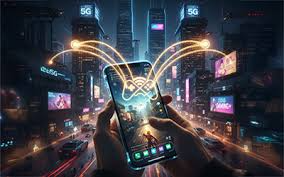
The mobile gaming industry has experienced explosive growth over the past decade, evolving from simple puzzle games into console-quality experiences played by millions worldwide. As smartphones become more powerful, one technology stands out as a true game-changer: 5G technology. With ultra-fast speeds, ultra-low latency, and massive connectivity, 5G is redefining how mobile games are developed, played, and monetized.
In this article, we’ll explore how 5G technology is powering mobile gaming, why it matters for gamers and developers, and what the future holds for 5G-enabled mobile games.
Understanding 5G Technology
Before diving into gaming, it’s important to understand what 5G is and how it differs from previous generations.
What Is 5G?
5G is the fifth generation of wireless network technology, designed to deliver:
- Download speeds up to 100x faster than 4G
- Latency as low as 1 millisecond
- Greater network capacity and reliability
Unlike 4G LTE, which primarily focused on faster browsing and streaming, 5G was built to support real-time, data-intensive applications such as cloud gaming, augmented reality (AR), and multiplayer mobile games.
Why Mobile Gaming Needs 5G
Mobile gaming is no longer casual-only. Competitive esports, open-world games, and multiplayer battle royales demand high-speed and low-latency connections. Traditional networks often struggle to keep up with these demands.
Here’s where 5G mobile gaming comes in.
Key Ways 5G Technology Is Transforming Mobile Gaming
1. Ultra-Low Latency for Real-Time Gameplay
Latency is the delay between a player’s action and the game’s response. Even a few milliseconds can make a difference in competitive games.
How 5G helps:
- Latency drops from 30–50 ms (4G) to as low as 1–5 ms
- Smoother real-time multiplayer experiences
- Faster reaction times in FPS, racing, and MOBA games
This makes mobile gaming far more competitive and responsive, rivaling PC and console gameplay.
2. Faster Download and Update Speeds
Large mobile games can exceed several gigabytes, making downloads and updates frustrating on slower networks.
With 5G:
- Games download in seconds instead of minutes
- Instant updates and patches
- Seamless content expansion without long waiting times
This improves user retention and encourages developers to release richer content more frequently.
3. Cloud Gaming on Mobile Devices
One of the biggest revolutions powered by 5G is cloud gaming.
What Is Cloud Gaming?
Cloud gaming allows players to stream games directly from remote servers, eliminating the need for powerful hardware.
5G makes cloud gaming possible on mobile by offering:
- Stable, high-bandwidth connections
- Minimal lag during streaming
- Console-quality graphics on smartphones
Services like cloud-based mobile gaming platforms rely heavily on 5G to deliver a smooth experience.
4. Enhanced Multiplayer and Online Gaming
Online multiplayer games thrive on stable connectivity. 5G supports:
- Thousands of simultaneous players
- Massive online battle arenas
- Real-time voice and video chat
This allows developers to design larger, more immersive multiplayer mobile games without worrying about server overload or lag.
5. Improved AR and VR Mobile Gaming
Augmented Reality (AR) and Virtual Reality (VR) are data-heavy and latency-sensitive.
5G enables:
- Real-time AR overlays without lag
- Multiplayer AR gaming experiences
- More immersive VR streaming on mobile devices
Games like location-based AR titles and immersive simulations benefit greatly from 5G’s speed and reliability.
6. Reduced Battery and Hardware Limitations
While 5G is fast, it also helps optimize performance through cloud processing.
Benefits include:
- Less strain on mobile CPUs and GPUs
- Lower device heating during gameplay
- Longer battery life for high-end games
Cloud-based rendering shifts heavy processing away from the device, making advanced games accessible even on mid-range smartphones.
7. Better In-Game Streaming and Content Creation
Mobile gamers are increasingly becoming content creators.
5G allows:
- Live streaming gameplay in 4K
- Instant sharing of clips and highlights
- Smooth integration with social media platforms
This fuels the growth of mobile esports and gaming communities worldwide.
Benefits of 5G Mobile Gaming for Developers
5G doesn’t just benefit players—it opens new opportunities for game developers.
More Creative Freedom
Developers can create:
- Larger open-world environments
- High-resolution textures
- AI-driven real-time interactions
New Monetization Models
5G supports:
- Subscription-based cloud gaming
- In-game streaming events
- Interactive ads with real-time engagement
Faster Testing and Updates
Real-time analytics and cloud deployment enable developers to test, update, and optimize games more efficiently.
5G and Mobile Esports Growth
Mobile esports is one of the fastest-growing segments in gaming.
5G contributes by:
- Ensuring lag-free competitive matches
- Supporting large-scale online tournaments
- Allowing professional-level play on mobile devices
This levels the playing field and brings esports to regions where consoles and PCs are less accessible.
Challenges of 5G Mobile Gaming
Despite its advantages, 5G still faces some challenges:
Limited Coverage
- 5G is not yet available in all regions
- Rural areas may still rely on 4G networks
Device Compatibility
- Not all smartphones support 5G
- Older devices may miss out on advanced features
Data Consumption
- High-quality gaming and streaming can consume large amounts of data
- Requires affordable and flexible data plans
As infrastructure expands, these challenges are expected to diminish.
The Future of Mobile Gaming with 5G
The future of mobile gaming powered by 5G looks incredibly promising.
What to Expect:
- Console-level games becoming mobile-first
- Fully cloud-based mobile gaming platforms
- Deeper integration of AI, AR, and VR
- Cross-platform gaming without performance loss
As 5G adoption increases globally, mobile gaming will continue to blur the line between smartphones, consoles, and PCs.
Conclusion
5G technology is powering mobile gaming by delivering faster speeds, lower latency, and unparalleled connectivity. From real-time multiplayer battles to cloud gaming and immersive AR experiences, 5G is reshaping how games are played and developed on mobile devices.
For gamers, it means smoother gameplay, better graphics, and more immersive experiences. For developers, it unlocks new creative and commercial possibilities. As 5G networks expand, mobile gaming is set to become the dominant force in the global gaming industry.
Frequently Asked Questions (FAQs)
Is 5G good for mobile gaming?
Yes, 5G significantly improves speed, reduces lag, and enhances overall gaming performance.
Do I need a special phone for 5G gaming?
Yes, you need a 5G-enabled smartphone to fully benefit from 5G gaming features.
Will 5G replace consoles and PCs?
Not entirely, but it will make high-quality gaming more accessible on mobile devices through cloud gaming.
If you’d like, I can also:
- Optimize this article for a specific keyword
- Rewrite it for a blog, affiliate site, or news portal
- Add internal linking, meta title, and meta description
Author

kalenunknown@gmail.com
Related Posts
Gaming Accessories: The Ultimate Guide to Enhancing Your Gaming Experience
Gaming has evolved far beyond being just a hobby. In the United States, gaming is now a mainstream form of entertainment, competition,...
Read out all
Premium Games: The Ultimate Gaming Experience for Serious Players in the USA
The gaming industry in the United States has evolved far beyond casual entertainment. Today, gaming is a lifestyle, a competitive arena, and...
Read out all
Gaming Monitors Explained: Refresh Rate, Response Time, and Beyond
In the fast-evolving world of PC and console gaming, a gaming monitor can be just as important as your GPU or CPU....
Read out all
Gaming Laptops vs Gaming PCs: Performance Tech Breakdown
The debate between gaming laptops vs gaming PCs has been ongoing for years, and in 2026 the choice is more nuanced than...
Read out all
Technology Behind Pro-Level Performance
Introduction: How Technology Is Redefining Elite Performance In today’s hyper-competitive world, pro-level performance is no longer driven by talent alone. From elite...
Read out all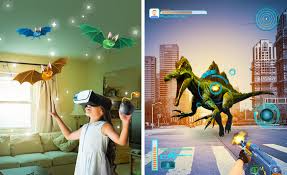
How Ray Tracing Is Redefining Realism in Video Games
The video game industry has always pushed the boundaries of technology to deliver more immersive and realistic experiences. From pixelated 2D sprites...
Read out all