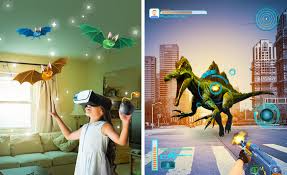
The video game industry has always pushed the boundaries of technology to deliver more immersive and realistic experiences. From pixelated 2D sprites to vast open-world 3D environments, each technological leap has transformed how players interact with virtual worlds. One of the most groundbreaking advancements in recent years is ray tracing, a rendering technique that is redefining realism in video games.
Ray tracing has quickly become a buzzword in gaming, especially with the arrival of next-generation consoles and powerful GPUs. But what exactly is ray tracing, and why is it considered a game-changer? In this article, we’ll explore how ray tracing works, why it matters, and how it is reshaping the future of video game realism.
What Is Ray Tracing in Video Games?
Ray tracing is a rendering technique that simulates the physical behavior of light. Instead of using approximations to fake lighting and shadows, ray tracing traces the path of light rays as they bounce off objects in a virtual scene.
In real life, light reflects, refracts, and scatters naturally. Ray tracing replicates these interactions digitally, resulting in:
- More realistic lighting
- Accurate reflections
- Natural shadows
- Enhanced depth and immersion
Unlike traditional rasterization, which has been the industry standard for decades, ray tracing calculates how light behaves in real time, producing visuals that closely resemble reality.
Traditional Graphics vs. Ray Tracing
Before ray tracing, most games relied on rasterization techniques combined with clever tricks such as baked lighting, screen-space reflections, and shadow maps. While effective, these methods have limitations.
Limitations of Traditional Rendering
- Reflections only appear on-screen objects
- Shadows lack natural softness
- Lighting often feels “flat” or artificial
- Environmental light interactions are pre-calculated
How Ray Tracing Changes the Game
Ray tracing eliminates many of these limitations by calculating lighting dynamically. As a result:
- Reflections show off-screen objects accurately
- Shadows soften naturally based on distance and light source
- Lighting responds realistically to environmental changes
- Scenes feel more lifelike and immersive
This leap in visual fidelity is why ray tracing is often described as a revolution rather than an incremental upgrade.
Key Ray Tracing Features That Enhance Realism
Ray tracing improves several core visual elements that directly affect realism in video games.
1. Realistic Lighting
Lighting is one of the most important factors in realism. Ray tracing allows for global illumination, meaning light bounces naturally between surfaces.
Benefits include:
- More accurate light diffusion
- Natural color bleeding between objects
- Improved indoor and outdoor lighting transitions
This makes environments feel grounded and believable, whether you’re exploring a dark dungeon or a sunlit city.
2. Accurate Reflections
With ray tracing, reflections are no longer approximations. Mirrors, water surfaces, glass, and metallic objects display true reflections based on the surrounding environment.
In ray-traced games:
- Characters appear in mirrors accurately
- Reflections respond to movement in real time
- Water surfaces look dynamic and realistic
This adds depth and realism that traditional techniques struggle to achieve.
3. Natural Shadows
Ray-traced shadows behave the way shadows do in the real world. They become softer as they move farther from the object and respond accurately to light source size and distance.
This results in:
- More realistic depth perception
- Enhanced atmosphere
- Improved environmental storytelling
Shadows are no longer just visual elements—they help shape mood and immersion.
4. Ambient Occlusion and Depth
Ray tracing improves ambient occlusion by calculating how light interacts in tight spaces, corners, and crevices.
This adds:
- Better object separation
- More realistic depth
- Greater environmental detail
Small visual details combine to create a significantly more immersive experience.
Ray Tracing and Next-Generation Gaming Hardware
Ray tracing was once too demanding for real-time gaming. However, modern hardware has made it possible.
GPUs and Ray Tracing
Graphics cards such as:
- NVIDIA GeForce RTX series
- AMD Radeon RX 6000 and 7000 series
include dedicated hardware designed to accelerate ray tracing calculations.
Consoles Embracing Ray Tracing
Both PlayStation 5 and Xbox Series X|S support ray tracing, making the technology more accessible than ever. Developers can now design games with ray tracing in mind across multiple platforms.
Popular Games That Showcase Ray Tracing
Several high-profile games demonstrate how ray tracing enhances realism:
- Cyberpunk 2077 – Realistic neon lighting and reflections
- Control – Stunning reflections and atmospheric lighting
- Minecraft RTX – A dramatic visual transformation
- Metro Exodus Enhanced Edition – Fully ray-traced global illumination
- Spider-Man Remastered – Accurate city reflections and lighting
These titles show how ray tracing can elevate both realism and artistic expression.
Performance Challenges and Optimization
While ray tracing delivers incredible visuals, it comes with performance costs.
Common Challenges
- Higher GPU load
- Lower frame rates
- Increased power consumption
Solutions and Technologies
To address these issues, developers and hardware manufacturers use technologies like:
- DLSS (Deep Learning Super Sampling)
- FSR (FidelityFX Super Resolution)
- Hybrid rendering techniques
These solutions balance performance and visual quality, making ray tracing more practical for everyday gaming.
How Ray Tracing Impacts Game Design
Ray tracing doesn’t just improve visuals—it influences how games are designed.
Enhanced Environmental Storytelling
Developers can use lighting and shadows to guide players, create tension, and convey emotions without relying heavily on dialogue or UI elements.
Real-Time World Interaction
Dynamic lighting enables environments that respond realistically to:
- Time of day changes
- Weather effects
- Player actions
This opens new creative possibilities for game designers.
The Future of Ray Tracing in Video Games
Ray tracing is still evolving, and its future looks promising.
What to Expect
- Improved performance efficiency
- Wider adoption across all platforms
- More fully ray-traced games
- Integration with AI-driven rendering
As hardware becomes more powerful and affordable, ray tracing is likely to become the industry standard rather than a premium feature.
Is Ray Tracing Worth It for Gamers?
For gamers who value immersion and visual fidelity, ray tracing is a major upgrade. While it may not always be essential for competitive gaming, it significantly enhances single-player and narrative-driven experiences.
As optimization improves, ray tracing will become more accessible, making high realism the norm rather than the exception.
Conclusion
Ray tracing is redefining realism in video games by transforming how light, shadows, and reflections behave in virtual worlds. By simulating real-world lighting physics, it delivers unprecedented visual fidelity and immersion.
Although it comes with performance challenges, advancements in hardware and optimization technologies are rapidly closing the gap. As ray tracing continues to evolve, it will shape the future of gaming, setting new standards for realism and artistic expression.
For players and developers alike, ray tracing represents not just a technological leap—but a new era of interactive realism.
If you want, I can also:
- Optimize this for WordPress SEO
- Add meta title & meta description
- Rewrite it for blog, Medium, or gaming website
- Insert keywords and internal linking strategy
Just tell me 👍
Author

kalenunknown@gmail.com
Related Posts
Gaming Accessories: The Ultimate Guide to Enhancing Your Gaming Experience
Gaming has evolved far beyond being just a hobby. In the United States, gaming is now a mainstream form of entertainment, competition,...
Read out all
Premium Games: The Ultimate Gaming Experience for Serious Players in the USA
The gaming industry in the United States has evolved far beyond casual entertainment. Today, gaming is a lifestyle, a competitive arena, and...
Read out all
Gaming Monitors Explained: Refresh Rate, Response Time, and Beyond
In the fast-evolving world of PC and console gaming, a gaming monitor can be just as important as your GPU or CPU....
Read out all
How 5G Technology Is Powering Mobile Gaming
The mobile gaming industry has experienced explosive growth over the past decade, evolving from simple puzzle games into console-quality experiences played by...
Read out all
Gaming Laptops vs Gaming PCs: Performance Tech Breakdown
The debate between gaming laptops vs gaming PCs has been ongoing for years, and in 2026 the choice is more nuanced than...
Read out all
Technology Behind Pro-Level Performance
Introduction: How Technology Is Redefining Elite Performance In today’s hyper-competitive world, pro-level performance is no longer driven by talent alone. From elite...
Read out all